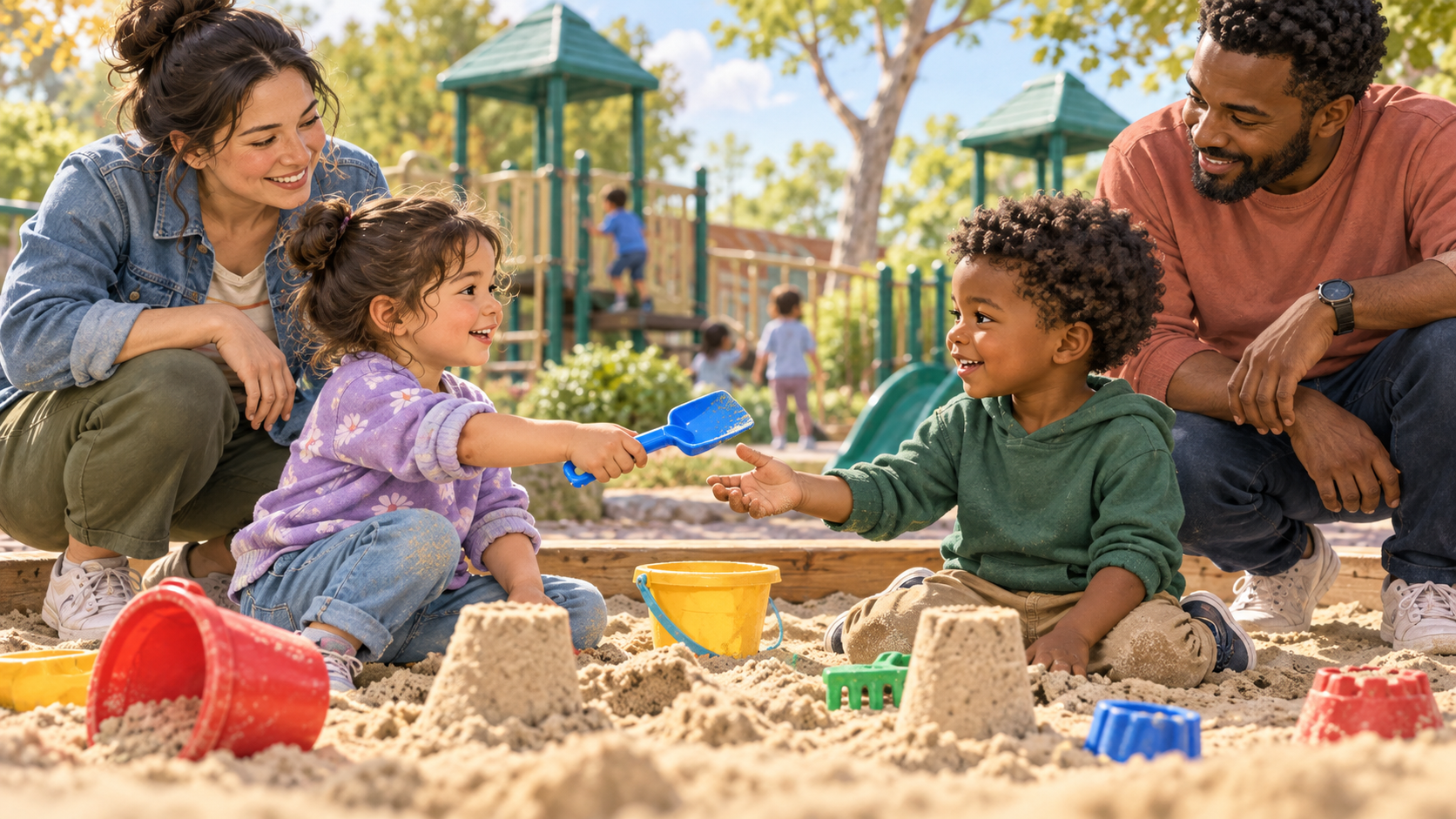
<p>Watching a child hover at the edge of a playground can tug at a parent’s heart. Friendship looks simple from across the sandbox, but it asks young children to notice another person, enter play, share an idea, handle disappointment, and recover when the answer is no. Between ages 2 and 5, those abilities are still under construction, and children vary widely in how quickly they warm up.</p> <p>Start with realistic expectations. Two-year-olds often play beside one another and move in and out of brief exchanges. By 3, many children begin joining play more directly. Four- and 5-year-olds may invent shared stories and prefer certain friends, but conflicts remain common. A child does not need a large group to be socially healthy; one comfortable connection can be meaningful.</p> <p>Teach an entry line the child can actually use. “Can I build too?” “What are you playing?” or “Do you want the blue shovel?” is more useful than “Go make friends.” Practice at home with stuffed animals, then quietly remind the child before approaching. Some children communicate first through an object or shared activity rather than conversation.</p> <p>Choose settings that fit the child. A crowded birthday party may overwhelm a slow-to-warm preschooler, while a short playdate with one familiar child may allow real interaction. Meet at a neutral place with something to do, such as blocks, chalk, water play, or a playground. Side-by-side activity reduces the pressure to perform socially.</p> <p>Keep early playdates short enough to end well. An hour may be plenty for a 3-year-old. Have duplicate or open-ended toys available, put especially precious items away, and offer a snack before everyone is exhausted. Stay nearby without directing every minute. Children need room to discover each other, with adults ready to help when the play stalls or becomes unsafe.</p> <p>Coach in the moment using few words. “Maya has the truck. You can ask for a turn or choose the bus.” “You both want to be the doctor. What other job does the clinic need?” Long lectures usually arrive after the child’s social brain is already overloaded. A short prompt can bridge the gap between wanting a friend and knowing what to do.</p> <p>Do not require sharing every object immediately. Young children can practice taking turns with support, but forced surrender may create resentment rather than generosity. Use a timer when helpful, describe whose turn it is, and provide enough materials for parallel play. Sharing becomes more genuine as impulse control, language, and trust grow.</p> <p>Help the child read signals without teaching mind-reading. “He turned away and said stop, so he may want space” is concrete. “Nobody likes it when you do that” is shaming and too broad. Point out friendly signals too: a child moving closer, offering a toy, or repeating an idea can be an invitation to continue.</p> <p>Resist arranging the entire friendship. It is fine to introduce families and create opportunities, but children may not connect with the person an adult chooses. Avoid announcing that two children are best friends after one good afternoon. Let relationships develop at their own pace and make room for preferences without allowing cruelty.</p> <p>Talk with teachers and caregivers. Ask whom the child plays near, which activities invite conversation, and what happens during difficult moments. A child who seems silent at pickup may have been engaged earlier. Teachers can also pair children around a shared interest or give a specific role that makes joining easier.</p> <p>Protect the child from comparison. A sibling who greets everyone is not the standard for a cautious child. Praise a manageable social risk: “You watched for a while and then asked to use the chalk.” Confidence grows when adults recognize effort without turning every interaction into a report card.</p> <p>Seek guidance when a child consistently avoids other children, cannot participate even with support, is frequently aggressive, seems unable to notice basic social cues, or is distressed by most peer situations. Hearing, language, anxiety, sensory needs, attention, and development can all affect social participation. A pediatrician can help decide whether an evaluation would be useful.</p> <p>Support the child after an unsuccessful attempt. If another child says no, explain that a refusal can mean the game is full, the child wants space, or they are not ready. It does not define your child’s worth. Practice moving to another activity or asking someone else. Learning to tolerate a small social disappointment is part of friendship, not evidence that friendship has failed.</p> <p>Children with different communication styles can still build genuine relationships. A child may use gestures, pictures, a communication device, signs, or fewer spoken words. Show peers how to pause, notice, and respond without speaking for the child. Friendship grows from shared enjoyment and mutual respect, not from everyone communicating in exactly the same way.</p> <p>Friendship in the preschool years is practice, not a finished skill. The most helpful adult is not a social director but a secure base: someone who creates chances, offers a phrase, helps repair a conflict, and accepts the child’s temperament. With repeated low-pressure experiences, many children find their way from watching the sandbox to building something together.</p>
Helping Your Child Make Friends
Watching a child hover at the edge of a playground can tug at a parent's heart. Friendship looks simple from across the sandbox, but it asks young children to notice another person, enter play, share an idea, handle…
By Rick Lofton · October 22, 2026
More stories
More child-development
 child-development
When Preschoolers Exclude or Feel Left Out
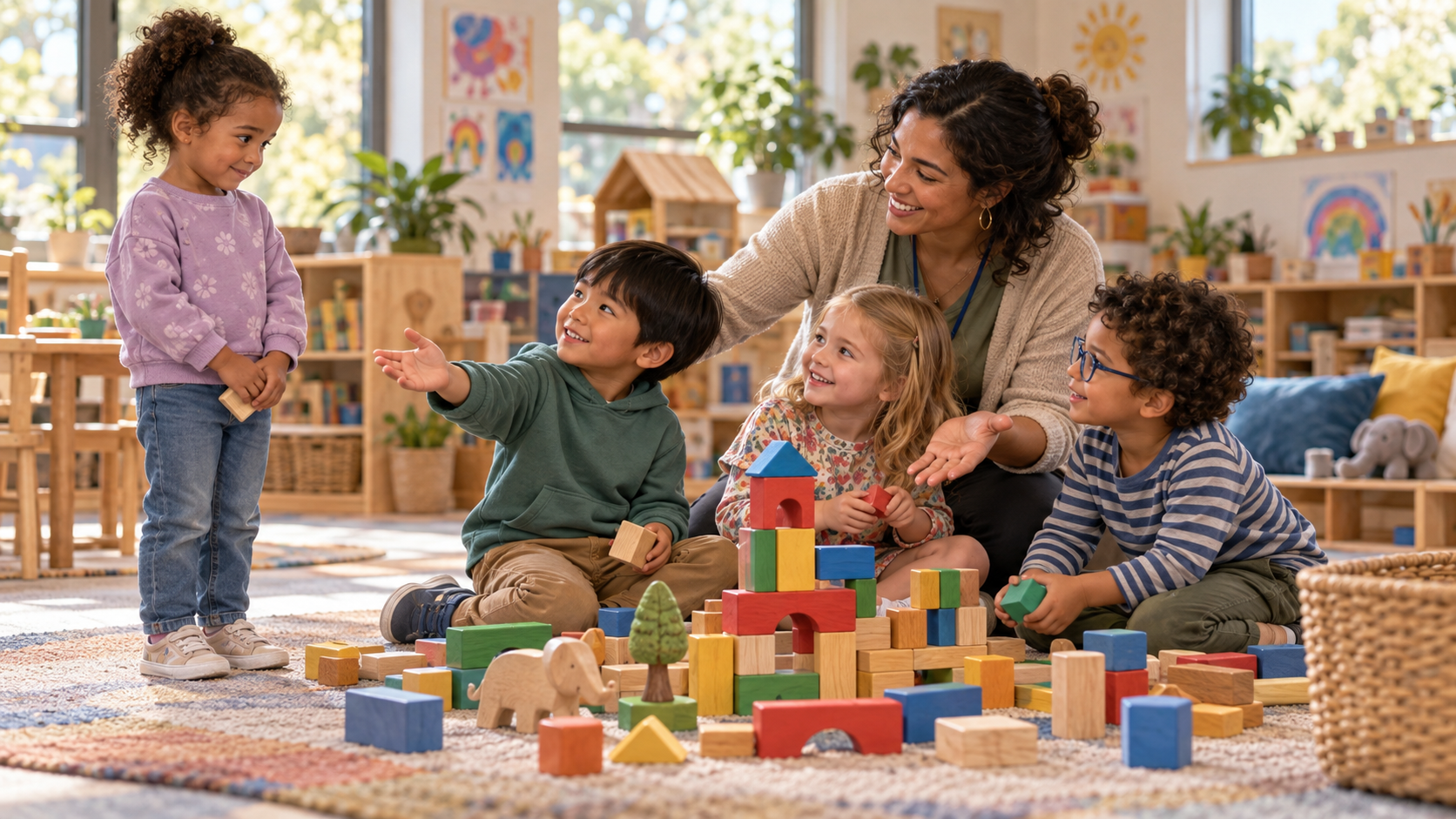
Preschool friendships can change between breakfast and pickup. A child may announce, "You cannot come to my party," or return home saying nobody would play. Those words hurt, but they do not always mean the same thing…
Read more →Oct 23, 2026
5 min read
 child-development
Why Preschoolers Lie and How Honesty Develops
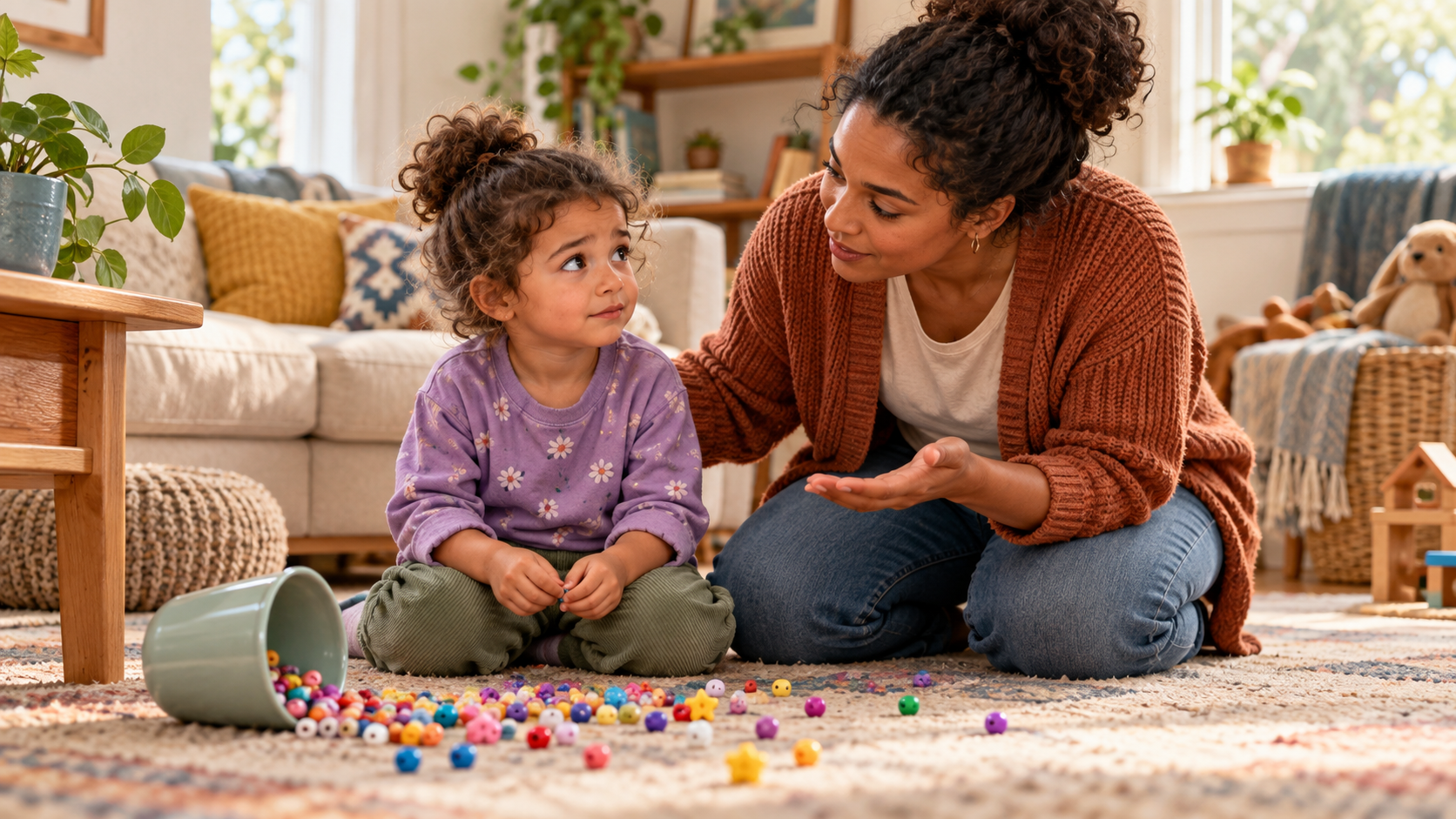
A preschooler looks at a crayon-covered wall and says, with complete seriousness, "I did not do it." For an adult, the evidence seems obvious. For a child ages 2 to 5, the moment may include wishful thinking, fear of an…
Read more →Oct 21, 2026
5 min read
 child-development
Helping Your Child Move On From Pacifiers or Thumb Sucking
Sucking is a normal way for babies and young children to soothe themselves. A pacifier or thumb may help with sleep, separation, boredom, or stress long after infancy. The habit becomes a family concern when it…
Read more →Oct 19, 2026
5 min read
The OWL Weekly
A small letter from Larissa, every Sunday.
One short video, one free printable, one cultural note, one small parenting win. Five minutes to read — written like a note to a friend.
Double opt-in via Beehiiv. Unsubscribe anytime.
