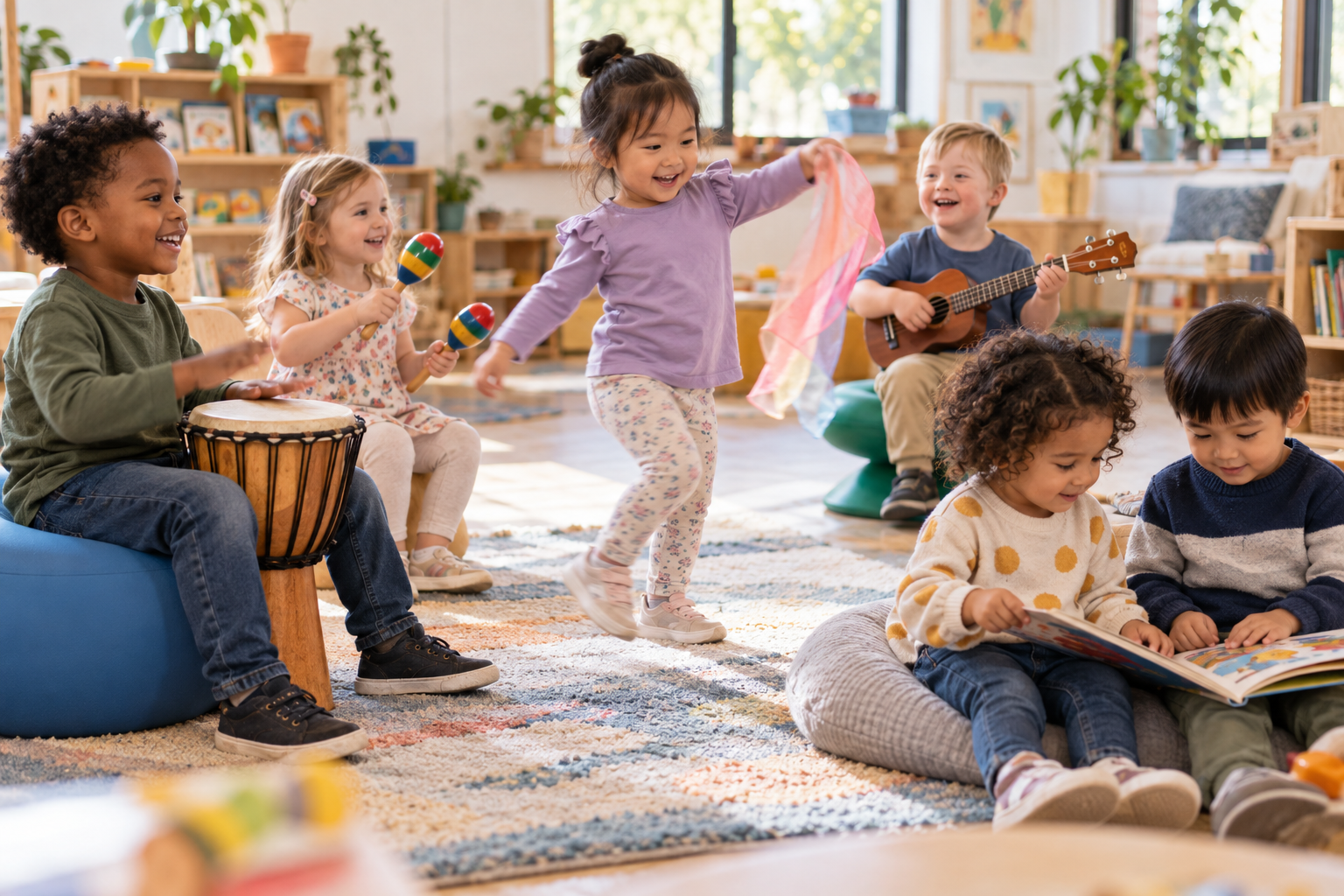
<p>Inclusive children’s content begins with a simple truth: every child deserves to feel welcome in the learning space. That requires more than placing different faces in the background. It asks creators to consider whose lives, voices, bodies, families, languages, and ways of participating are treated as ordinary. Parents do not need a perfect plan; they need a useful place to begin and permission to adjust it for the child in front of them.</p> <p>That principle shapes both what OWL makes and how we talk about it. Families deserve clear purpose, age-aware design, and content that does not underestimate children or overwhelm the adults supporting them. We are building a connected learning world, but every resource should still be able to justify the time and attention it asks from a family.</p> <p>A practical place to begin is to represent children from varied cultures, family structures, abilities, and communities across everyday stories. If the idea feels difficult, simplify the materials or do one part together. Support can fade as the routine becomes familiar.</p> <p>Another useful approach is to avoid making one character responsible for explaining an entire group. Use ordinary conversation while you play. Words connected to a real action are easier for young children to understand and revisit.</p> <p>Families can also use clear visuals, thoughtful pacing, captions, gestures, and repetition to widen access. There is no need to correct every unexpected choice. Ask what the child is doing and let their explanation guide the next step.</p> <p>On a different day, try to invite cultural expertise and listen when families identify a stereotype or omission. Repetition is productive at this age. A child who asks for the same experience again is often practicing something important.</p> <p>Finally, remember to show kindness and difference without turning every story into a lesson about difference. Keep the first attempt brief and notice what captures attention; that observation will tell you what to repeat or change next time.</p> <p>We also believe parents deserve honesty about what early-learning content can and cannot do. A thoughtful resource can spark language, practice, movement, or connection. It cannot replace responsive relationships, developmental support, rest, free play, or the knowledge families hold about their own children. OWL should be a helpful partner inside that larger picture.</p> <p>The value of what inclusive children’s content looks like is not found in doing every suggestion at once. Choose the idea that fits today’s time, space, energy, and developmental stage. Watch the child’s response, make one small adjustment, and treat that response as useful information. This flexible rhythm is how a promising idea becomes something a family can actually use.</p> <p>OWL’s promise is to be open to all children, all backgrounds, and all beliefs. Series such as Sing Our World, alongside songs like “Many Stories One Home,” help us celebrate connection while remaining curious and accountable. Inclusion is an ongoing practice, not a badge we award ourselves.</p> <p>This is the standard we want parents to use when they judge OWL, too. Our work should feel joyful without being empty, educational without being rigid, and inclusive without being performative. We will keep listening, testing, and growing with the families and educators who welcome OWL into a child’s day.</p>
← owl-resources
owl-resources3 min read
What Inclusive Children's Content Looks Like
Inclusive children's content begins with a simple truth: every child deserves to feel welcome in the learning space. That requires more than placing different faces in the background. It asks creators to consider whose…
By Rick Lofton · October 26, 2026
The OWL Weekly
A small letter from Larissa, every Sunday.
One short video, one free printable, one cultural note, one small parenting win. Five minutes to read — written like a note to a friend.
Double opt-in via Beehiiv. Unsubscribe anytime.
